
MMRDA’s Urban Transformation Vision Gains Global Recognition at Prestigious WEF-Linked Davos Baukultur Alliance Annual Meeting in Switzerland
Metropolitan Commissioner Dr. Sanjay Mukherjee, IAS, Engages with Chairman of World Economic Forum: Mumbai’s Integrated Metropolitan Development Model Draws International Attention

POSTED BY:- Poonam S. Juthani
DT:-13/05/2026
9867490397
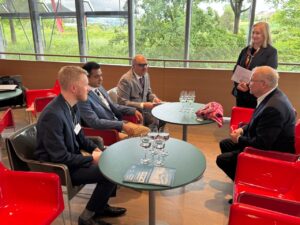
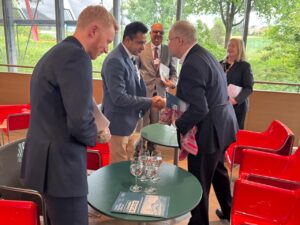
Mumbai, 12 May 2026:
In a significant global recognition of Mumbai’s rapidly evolving metropolitan transformation and Maharashtra’s expanding urban-development leadership, the Mumbai Metropolitan Region Development Authority (MMRDA) was invited to participate in the prestigious World Economic Forum-linked Davos Baukultur Alliance Annual Meeting 2026, held at the internationally renowned Zentrum Paul Klee in Bern, Switzerland.
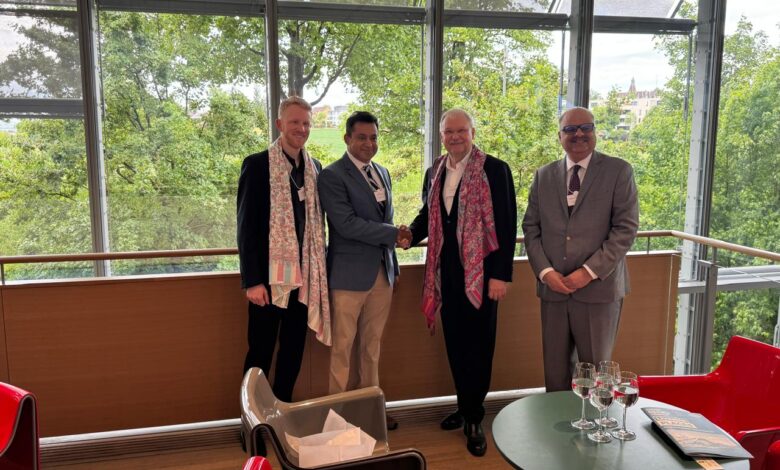
Representing the Mumbai Metropolitan Region at the high-level global platform, Dr. Sanjay Mukherjee, IAS, Metropolitan Commissioner, MMRDA, participated in strategic discussions with senior global urban-development stakeholders and engaged with Mr. Alois Zwinggi, President and Chief Executive Officer of the World Economic Forum, on future pathways of collaboration between MMRDA and the Forum.
The World Economic Forum (WEF), headquartered in Geneva, Switzerland, is one of the world’s foremost international institutions for public-private cooperation, bringing together governments, businesses, global organisations, policymakers, financial institutions, academia, and civil society leaders to shape long-term global agendas surrounding economic growth, sustainability, infrastructure, governance, technology, climate resilience, and urban transformation.
The World Economic Forum’s Centre for Urban Transformation works with governments, metropolitan authorities, cities, businesses, and institutional partners globally to advance innovative, resilient, inclusive, investment-ready, and sustainable urban growth models. Its work holds direct relevance for rapidly expanding metropolitan regions such as Mumbai, where infrastructure development, climate resilience, multimodal mobility, investment mobilisation, economic competitiveness, liveability, and institutional coordination must evolve simultaneously through integrated and future-ready planning frameworks.
The Davos Baukultur Alliance Annual Meeting 2026 was organised under the theme “Liveable Places” and convened leading global voices from government, urban planning, finance, infrastructure, architecture, engineering, construction, real estate, academia, and international institutions to deliberate on how high-quality “Baukultur” — a globally respected philosophy advocating sustainable, people-centric, culturally sensitive, and long-lasting urban environments — can strengthen resilience, economic value, quality of life, and place-based development.
MMRDA’s participation at the globally respected platform reflects the growing international recognition of the Mumbai Metropolitan Region as one of the world’s most significant urban transformation corridors, where large-scale infrastructure delivery, integrated mobility systems, climate-conscious planning, regional economic growth, and future metropolitan expansion are being pursued simultaneously through a unified institutional framework.
The invitation also positions MMRDA among a select group of metropolitan institutions globally participating in emerging conversations surrounding the future of sustainable urbanisation, liveability, infrastructure-led regional transformation, and next-generation metropolitan governance.
As part of the official programme, Dr. Sanjay Mukherjee participated in the session titled “Before the First Brick: Aligning Capital with Quality,” which focused on the importance of integrating governance systems, land frameworks, financial structuring, evidence-based planning, risk allocation, sustainability considerations, and long-term urban quality at the earliest stages of infrastructure and metropolitan development.
During the discussions, Dr. Mukherjee highlighted MMRDA’s experience in infrastructure-led metropolitan transformation and underscored the importance of embedding resilience, integrated mobility, sustainability, economic productivity, and citizen-centric urban planning into the foundational stages of project conceptualisation, financing, and implementation.
He also presented Mumbai’s ongoing transformation through large-scale metro expansion, underground mobility corridors, multimodal transportation systems, Transit-Oriented Development (TOD), digital mobility integration, regional growth hubs, and the Authority’s broader “Mumbai in Minutes” and “Mumbai 3.0” vision frameworks.
The Authority’s integrated metropolitan-development model generated significant interest among international stakeholders due to the scale, speed, and institutional complexity involved in transforming one of the world’s largest and most densely populated urban regions while simultaneously building future-ready infrastructure ecosystems capable of supporting long-term sustainable economic growth.
On the sidelines of the Annual Meeting, Dr. Sanjay Mukherjee held a focused strategic meeting with Mr. Alois Zwinggi, President and Chief Executive Officer of the World Economic Forum. Discussions covered the future roadmap of MMRDA’s engagement with the Forum, including strengthening of the existing Memorandum of Collaboration beyond September 2026, MMRDA’s proposed institutional partnership engagement with the World Economic Forum, participation pathways under the WEF Centre for Urban Transformation initiatives including the YES Cities programme, and future collaborative opportunities involving global urban-development and sustainability platforms.
Dr. Mukherjee also extended an invitation to Mr. Zwinggi to visit Mumbai as part of the next phase of MMRDA–WEF engagement and collaborative urban-development initiatives.
MMRDA and the World Economic Forum had earlier signed a Memorandum of Collaboration in Mumbai on 12 September 2024 to establish a framework for cooperation in sustainable urban development, infrastructure transformation, investment facilitation, and future-ready metropolitan planning. The Bern meeting provided an important opportunity to review the progress achieved through the collaboration and discuss a structured roadmap for expanding the partnership further.
Over the past two years, MMRDA’s engagement with the World Economic Forum ecosystem has facilitated participation across major international platforms and policy dialogues, strengthened exchange with leading global institutions, and reinforced MMRDA’s positioning as a metropolitan authority capable of combining large-scale infrastructure execution with climate-conscious, investment-ready, resilient, and inclusive urban transformation.
Speaking on the occasion, Dr. Sanjay Mukherjee, IAS, Metropolitan Commissioner, MMRDA, said:
*“The Mumbai Metropolitan Region today represents one of the world’s most important urban growth and infrastructure transformation corridors. MMRDA is committed to shaping this region as a globally competitive, climate-resilient, liveable, and future-ready metropolitan economy through integrated infrastructure, mobility, sustainability, and long-term regional planning. Our engagement with the World Economic Forum and participation at the Davos Baukultur Alliance platform reflects the growing international relevance of Mumbai’s urban transformation journey. As cities across the world search for scalable and sustainable metropolitan models, Mumbai’s experience offers important insights into integrated mobility systems, infrastructure-led economic growth, climate-conscious development, and institutional urban governance at metropolitan scale.”*
The meeting further reinforced MMRDA’s long-term objective of positioning the Mumbai Metropolitan Region as a global lighthouse for sustainable urbanisation, infrastructure-led economic transformation, resilient mobility systems, climate-sensitive planning, and inclusive metropolitan growth.
MMRDA will continue to work with national and international institutions, policymakers, investors, knowledge partners, and global urban-development platforms to bring innovation, global best practices, responsible investment, and implementation capacity into the transformation of the Mumbai Metropolitan Region while strengthening economic productivity, sustainability, employment generation, and quality of urban life.
Several strategic collaborations, institutional partnerships, and investment frameworks initiated through MMRDA’s recent World Economic Forum engagements have already entered active implementation, advanced planning, or structured execution stages across key sectors including infrastructure, mobility, urban development, sustainability, innovation, and regional economic growth.