
NGMA Celebrates the Launch of Landmark Book on Rao Bahadur M. V. Dhurandhar
Publication by archaeologist and art historian Sandeep Dahisarkar highlights the legacy of the Bombay School of Art

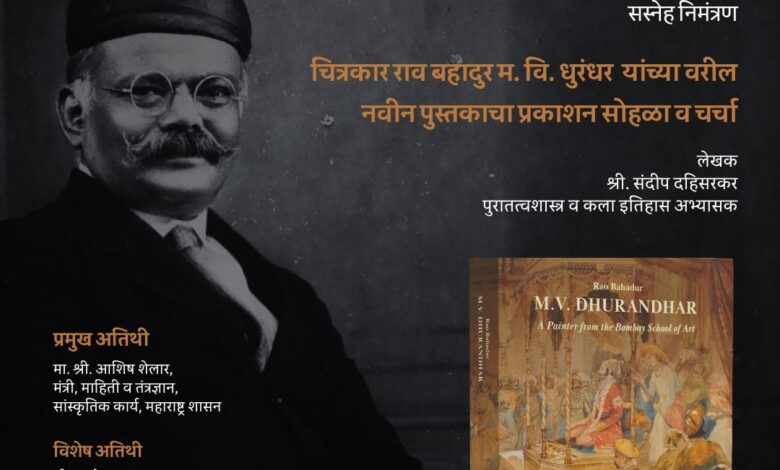
The National Gallery of Modern Art (NGMA), under the Ministry of Culture, Government of India, has announced the launch of a significant publication titled “Rao Bahadur M. V. Dhurandhar: A Painter from the Bombay School of Art”. Authored by archaeologist and art historian Sandeep Dahisarkar, the book is a comprehensive exploration of the life and works of one of India’s most celebrated painters, Rao Bahadur M. V. Dhurandhar, whose contributions to the Bombay School of Art remain foundational in the history of Indian modern art.
The event was graced by the presence of Ashish Shelar, Minister for Cultural Affairs, Government of Maharashtra, and senior artist Vasudev Kamat, alongside distinguished guests from the art and cultural fraternity. A special discussion with the author was moderated by historian and writer Akshay Chavan, offering audiences deeper insights into the making of the book and the enduring relevance of Dhurandhar’s artistic legacy.
A Tribute to a Pioneering Artist
Rao Bahadur M. V. Dhurandhar is widely regarded as one of the most important figures of the Bombay School of Art, a movement that shaped the trajectory of Indian painting in the late 19th and early 20th centuries. His works, known for their technical mastery and narrative depth, captured the cultural and social milieu of his time. Dhurandhar’s paintings often depicted mythological themes, portraits, and everyday life, blending academic realism with Indian sensibilities.
The newly launched book by Sandeep Dahisarkar meticulously documents Dhurandhar’s journey, contextualising his art within the broader framework of colonial India and the evolving identity of Indian artists. By examining archival material, rare sketches, and lesser‑known works, the publication provides a holistic view of Dhurandhar’s oeuvre and his role in shaping the Bombay School’s legacy.
Author’s Perspective
Speaking about the book, Sandeep Dahisarkar emphasised the importance of revisiting Dhurandhar’s contributions at a time when Indian art history is being re‑examined with fresh perspectives. He noted that Dhurandhar was not only a painter of exceptional skill but also a teacher and mentor who influenced generations of artists. His ability to balance academic training with Indian themes made him a unique figure in the art world.
Dahisarkar highlighted that the book aims to bridge the gap between scholarly research and public appreciation, making Dhurandhar’s work accessible to both academics and art lovers. By shedding light on his artistic philosophy and the socio‑cultural context of his paintings, the publication seeks to inspire renewed interest in the Bombay School of Art.
Celebrating Cultural Heritage
The presence of dignitaries such as Ashish Shelar and Vasudev Kamat underscored the significance of the occasion. Shelar praised the initiative as a vital step in preserving and promoting India’s cultural heritage, noting that artists like Dhurandhar laid the foundation for modern Indian art. Vasudev Kamat, himself a senior artist, reflected on Dhurandhar’s influence on contemporary practice, acknowledging the timeless quality of his work and its relevance for today’s generation of artists.
The discussion moderated by Akshay Chavan provided an engaging platform for dialogue between the author and the audience. Chavan’s questions explored the challenges of researching historical figures, the importance of archival preservation, and the role of institutions like NGMA in fostering awareness of India’s artistic traditions.
NGMA’s Role in Promoting Scholarship
The National Gallery of Modern Art has consistently played a pivotal role in promoting scholarship, exhibitions, and publications that highlight India’s artistic heritage. By hosting the launch of Dahisarkar’s book, NGMA reaffirmed its commitment to supporting research and disseminating knowledge about artists who have shaped the nation’s cultural identity.
The event also reflected NGMA’s broader mission of engaging audiences with meaningful discussions on art and history. Through initiatives like this, the institution continues to serve as a bridge between scholars, practitioners, and the public, ensuring that the legacy of artists like Dhurandhar remains alive and relevant.
Impact and Future Outlook
The launch of “Rao Bahadur M. V. Dhurandhar: A Painter from the Bombay School of Art” is expected to have a lasting impact on the study and appreciation of Indian art. For scholars, the book provides a valuable resource that combines rigorous research with accessible narrative. For artists and students, it offers inspiration and insight into the techniques and philosophies of a master painter. For the general public, it opens a window into the rich history of the Bombay School and its role in shaping India’s artistic identity.
Looking ahead, the publication is likely to spark further research and exhibitions dedicated to Dhurandhar and his contemporaries. It also sets a precedent for documenting the lives of other artists whose contributions have not yet received adequate recognition.
Conclusion
The launch of Sandeep Dahisarkar’s book at NGMA marks a significant moment in India’s cultural calendar. By celebrating the life and work of Rao Bahadur M. V. Dhurandhar, the event not only honoured a pioneering artist but also reinforced the importance of preserving and promoting India’s artistic heritage.
With the support of the Ministry of Culture and the participation of distinguished guests, the occasion highlighted the enduring relevance of the Bombay School of Art and its role in shaping modern Indian painting. As the book reaches wider audiences, it promises to deepen appreciation for Dhurandhar’s legacy and inspire future generations to engage with India’s rich artistic traditions.