
Putin’s India Visit Underscores Strategic Autonomy Amid US Trade Pressures
As New Delhi deepens energy and defence ties with Moscow, Washington’s tariff threats test India’s balancing act between old allies and emerging global expectations

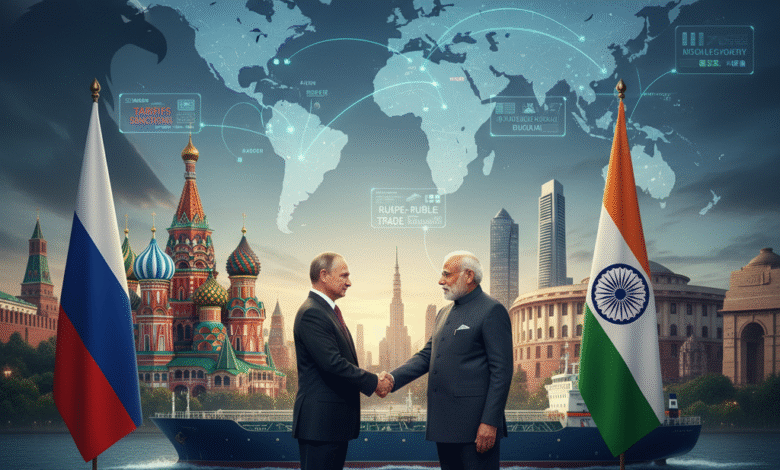
Russian President Vladimir Putin’s upcoming visit to India marks a pivotal moment in New Delhi’s foreign policy calculus, as it navigates a complex web of strategic interests, economic imperatives, and geopolitical pressures. The visit comes at a time when India’s deepening engagement with Russia—particularly in oil trade and defence cooperation—is drawing scrutiny from the United States, which has imposed punitive tariffs in response to India’s continued dealings with Moscow.
The backdrop to this diplomatic choreography is the evolving global order, where India is increasingly asserting its strategic autonomy. Despite Western sanctions on Russia following the Ukraine conflict, India has maintained robust energy imports from Moscow, citing national interest and energy security. In fact, Russia has emerged as India’s top crude oil supplier, accounting for over 35% of total imports in 2025, a dramatic shift from pre-2022 figures.
President Putin’s visit is expected to reinforce this energy partnership, with discussions likely to include long-term supply agreements, rupee-ruble payment mechanisms, and expanded cooperation in refining and petrochemicals. Moscow has also proposed increasing imports of Indian agricultural goods and pharmaceuticals to address the growing trade imbalance, which has tilted heavily in Russia’s favor due to oil purchases.
Defence collaboration remains another cornerstone of the bilateral relationship. India continues to rely on Russian platforms for its strategic arsenal, including the S-400 missile systems, nuclear submarines, and fighter jets. Joint production initiatives, such as the BrahMos missile and AK-203 rifles, underscore the depth of this partnership. Putin’s visit is expected to include reviews of ongoing defence projects and potential new agreements in space and cybersecurity.
However, this strengthening of India-Russia ties is not without consequence. The United States, under President Donald Trump, has responded with a 50% tariff hike on select Indian exports, citing India’s defiance of the sanctions regime. Washington has also expressed concern over India’s procurement of Russian military hardware, which it claims undermines efforts to isolate Moscow diplomatically and economically.
These tensions place India in a delicate position. On one hand, it seeks to preserve its strategic partnership with the US, which includes cooperation in technology, counterterrorism, and Indo-Pacific security. On the other, it values its historical ties with Russia, a country that has consistently supported India on global platforms and supplied critical defence equipment without conditionalities.
India’s response has been measured but firm. Officials have reiterated that foreign policy decisions are guided by national interest, not external pressure. The principle of strategic autonomy—first articulated during the Cold War and refined in the post-liberalization era—remains central to India’s global engagement. This approach allows New Delhi to maintain diversified partnerships without aligning fully with any single bloc.
The visit also coincides with the 15th anniversary of the “Special and Privileged Strategic Partnership” between India and Russia, a designation that reflects the depth and breadth of bilateral cooperation. From nuclear energy and space exploration to education and humanitarian aid, the partnership spans multiple domains and continues to evolve.
Putin’s remarks at the Valdai Discussion Club further underscore the warmth in bilateral relations. He described Prime Minister Narendra Modi as a “balanced, wise, and nationally oriented leader,” and praised India’s refusal to succumb to external pressure. “India remembers our support during its independence struggle, and we value that,” Putin said, adding that the relationship is built on trust and mutual respect.
For India, the challenge lies in managing optics and outcomes. While it seeks to expand trade with Russia, it must also address concerns from Western partners and avoid jeopardizing its own economic interests. The US remains a key export destination and a source of investment and technology. Any escalation in trade tensions could impact sectors ranging from textiles and pharmaceuticals to IT services.
Analysts suggest that India may explore middle-ground solutions, such as enhancing transparency in its Russia dealings, diversifying its energy basket, and engaging in quiet diplomacy with Washington. The goal is to preserve strategic flexibility while minimizing economic fallout.
Ultimately, Putin’s visit is more than a bilateral engagement—it is a litmus test for India’s global posture. As the world becomes increasingly polarized, India’s ability to chart an independent course, rooted in pragmatism and principle, will define its role as a leading power in the 21st century.