

Escalating Tensions: NATO Fortifies Eastern Flank Amidst Russian Drone Incursion
Emergency UN Security Council Meeting Called as US-Russia Dynamics Intensify

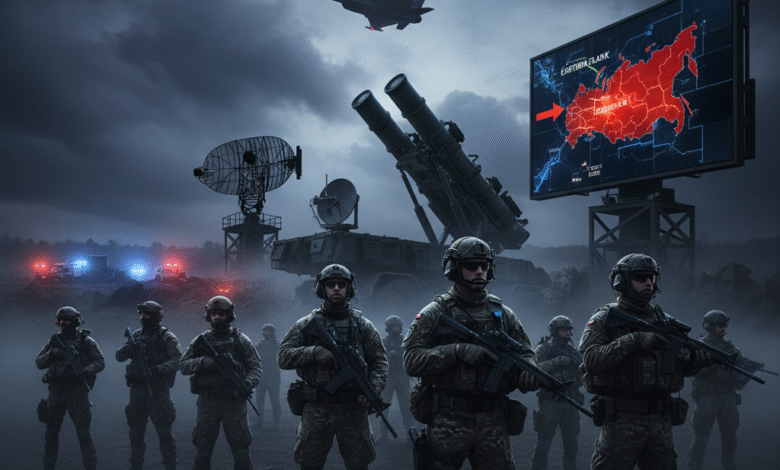
The already volatile geopolitical landscape between the United States and Russia has reached a new boiling point following a critical incident involving a Russian drone incursion into Polish airspace. In a swift and decisive response, NATO has announced the activation of its ‘Eastern Flank’ defense protocols, a move signaling heightened readiness and a palpable increase in tensions across Europe. The international community, watching with bated breath, now awaits an emergency meeting of the UN Security Council, convened to address this grave breach of sovereignty and its far-reaching implications for global security. This event not only underscores the precarious nature of current diplomatic relations but also raises significant concerns about the potential for broader conflict.
The incident itself involved a Russian military drone that reportedly crossed into Polish airspace, a clear violation of a NATO member’s territorial integrity. While details surrounding the drone’s mission and its exact trajectory remain under intense scrutiny, the incursion immediately triggered a robust response from Polish air defense systems and subsequently, from NATO command. Poland, as a frontline state and a staunch ally, views such an act with extreme gravity, interpreting it as a direct challenge to its security and an audacious probing of the alliance’s defensive capabilities. This is not an isolated event but part of a pattern of increased Russian military activity near NATO borders, which has kept the alliance on high alert for months.
NATO’s response, the activation of its ‘Eastern Flank’ defense, signifies a significant escalation in military posture. This involves bolstering air policing missions, deploying additional surveillance assets, and potentially reinforcing ground troops in member states bordering Russia and Belarus. The move is designed to send an unequivocal message of deterrence, demonstrating NATO’s commitment to collective defense under Article 5 of its founding treaty, which states that an attack on one member is an attack on all. This defensive maneuver aims to reassure eastern allies, particularly those with historical anxieties about Russian aggression, that the alliance stands united and prepared to defend every inch of its territory. The immediate goal is to prevent any further incursions and to de-escalate the situation through a show of strength and resolve.
The reverberations of this incident have quickly reached the highest echelons of international diplomacy. The UN Security Council, the primary body for maintaining international peace and security, is set to convene an emergency meeting. This gathering will provide a crucial platform for member states to discuss the implications of the drone incursion, to seek clarification from Russia, and to explore diplomatic pathways to de-escalate the burgeoning crisis. For the United States, a permanent member of the Security Council and the leading force within NATO, the meeting presents an opportunity to rally international condemnation of Russia’s actions and to solidify support for the alliance’s defensive measures. However, given Russia’s veto power within the Council, any substantive resolution or condemnation is likely to face significant hurdles.
The broader context of US-Russia tensions further complicates this scenario. Relations have been strained for years, marked by disagreements over regional conflicts, cyber warfare, and geopolitical influence. The current situation in Eastern Europe, with ongoing conflicts and military buildups, has created a highly combustible environment. Any miscalculation or accidental engagement could have catastrophic consequences, making the need for clear communication and de-escalation mechanisms more urgent than ever. Both sides are engaged in a delicate dance of deterrence and diplomacy, where every military maneuver and diplomatic statement is carefully weighed for its potential impact on the fragile balance of power.
For European allies, particularly those in Central and Eastern Europe, the incident is a sobering reminder of the persistent security threats emanating from Russia. It reinforces their calls for continued military aid, robust defensive capabilities, and unwavering support from the broader NATO alliance. The economic implications are also significant, with increased defense spending, potential disruptions to trade routes, and heightened market volatility reflecting investor nervousness about regional instability. The long-term implications for European security architecture could involve a more permanent and robust NATO presence in the east, redefining the collective defense strategy for years to come.
As the UN Security Council prepares to meet, the world watches to see if diplomacy can prevail over the brinkmanship. The choices made in the coming days by key international actors will determine whether this incident becomes another managed crisis or a precursor to a more dangerous confrontation. The ‘Eastern Flank’ defense is activated, the diplomatic channels are open, but the underlying tensions remain acutely high, casting a shadow of uncertainty over global peace and stability.