
“The Bengal Files”: Unveiling a Forgotten Chapter of India’s History
Vivek Agnihotri’s final installment in the acclaimed trilogy confronts the suppressed horrors of Direct Action Day and the Noakhali genocide with unflinching intensity.

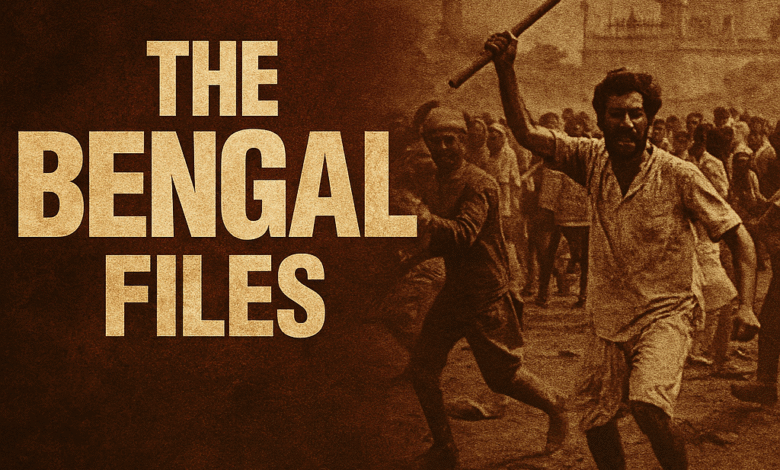
Mumbai — Filmmaker Vivek Ranjan Agnihotri, known for his politically charged narratives, returns with The Bengal Files, a hard-hitting historical drama that revisits one of the most brutal and underreported episodes of India’s pre-independence era. The film is the final installment in Agnihotri’s “Files Trilogy,” following The Tashkent Files and The Kashmir Files, both of which sparked national debate and drew critical attention for their bold storytelling.
The Bengal Files centers around the communal carnage unleashed during Direct Action Day in 1946 and the subsequent Noakhali genocide. These events, often omitted from mainstream historical discourse, are brought to life through a gripping narrative that blends investigative drama with historical reconstruction.
The story follows CBI officer Shiva Pandit, portrayed by Darshan Kumaar, who is tasked with probing the disappearance of journalist Gita Mandal. His investigation leads him into the political underbelly of Bengal, where buried truths and institutional silence collide. Pallavi Joshi plays Bharati Banerjee, an elderly woman whose fragmented memories become the key to unlocking the horrors of the past. Her recollections transport viewers to a time when Bengal was torn apart by communal hatred and political betrayal.
The film’s depiction of Direct Action Day—called by the Muslim League to demand Pakistan—is both graphic and unflinching. What began as a political protest in Calcutta escalated into mass killings, looting, and destruction. The narrative then shifts to Noakhali, where Hindu minorities were targeted in a wave of violence that left thousands dead and displaced. Agnihotri’s screenplay does not shy away from the brutality, instead choosing to confront it head-on, challenging viewers to reckon with the consequences of historical amnesia.
Veteran actor Mithun Chakraborty delivers a haunting performance as Madman Chatur, a character who oscillates between madness and prophetic insight, symbolizing the fractured conscience of a nation. Anupam Kher appears as Mahatma Gandhi, offering a layered portrayal of the leader’s moral dilemmas during the partition crisis. Saswata Chatterjee’s role as Sardar Hosseini, a local MLA, adds depth to the film’s contemporary political commentary.
Visually, The Bengal Files is stark and immersive. Cinematographer Attar Singh Saini captures Bengal’s landscapes with a palette that shifts from nostalgic sepia tones to blood-red urgency. The film’s editing, handled by Shankh Rajadhyaksha, maintains a relentless pace across its 204-minute runtime, ensuring that the emotional and historical weight never falters.
The soundtrack, composed by Rohit Sharma, features emotionally resonant pieces like “Kichudin Mone Mone,” which underscore the trauma and resilience of the characters. The music serves not just as background but as a narrative device, amplifying the film’s emotional core.
While the film is expected to stir debate over its portrayal of sensitive historical events, it undeniably succeeds in reigniting public discourse around Bengal’s role in the partition. The Bengal Files is not just a film—it is a cinematic reckoning. It demands attention, reflection, and above all, a willingness to confront truths long buried beneath the surface of official history.
Asia Prime News will continue to track reactions and discussions surrounding the film’s release. Stay tuned for exclusive interviews, audience reviews, and expert commentary.