

Post‑Stroke Treatment Must Be Covered by Insurance
Stroke cases are rising rapidly in India. Timely treatment is saving lives, but the absence of insurance coverage for post‑stroke care means many patients are unable to access essential rehabilitation. Families are left to bear heavy financial burdens.

POSTED BY:- Poonam S. Juthani
DT:-10/04/2026
9867490397
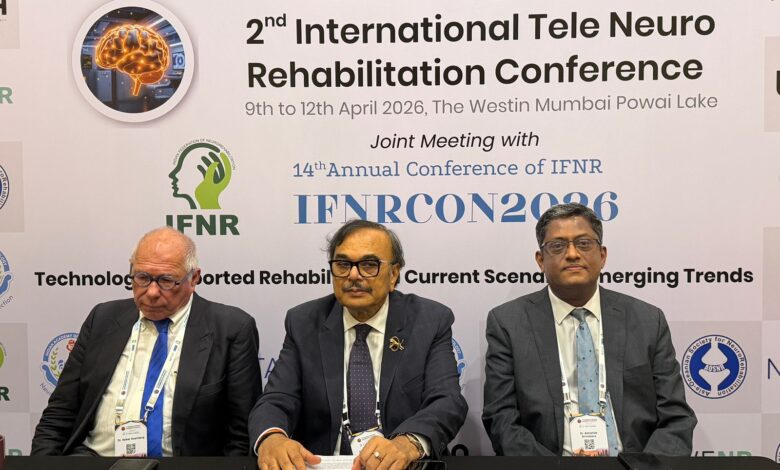
Mumbai — Stroke cases in India continue to increase. While emergency treatment saves lives, post‑stroke rehabilitation is still excluded from most insurance policies. Experts note that the real challenge begins after hospital discharge, when patients require long‑term therapy. Many families cannot afford the costs, making it vital that neuro‑rehabilitation be included in insurance coverage to ensure proper treatment.
Stroke is no longer just an emergency; it has become a chronic condition requiring continuous care. Yet for many patients, rehabilitation is either unavailable or prohibitively expensive. Families face difficult choices as long‑term therapy, caregiving, and repeated hospital visits add financial strain, especially when these are not covered by insurance.
Dr. Nirmal Surya, President of the Indian Federation of Neurorehabilitation (IFNR), said:
“India reports more than 1.25 million new stroke cases every year. This is a 51% increase compared to 1990, and India accounts for 10% of global stroke cases. Stroke is now the second leading cause of death and the third leading cause of disability in the country. Although survival rates have improved, timely access to rehabilitation remains a major challenge. One in four patients receives no treatment, and only 17% undergo therapy under specialist supervision. Advanced technology is available in just 20% of centers, while nearly 70% of the population lives in rural areas where such facilities are lacking.”
He added:
“Recovery after stroke does not end with hospital discharge. Long‑term, structured rehabilitation is essential for patients to walk, speak, and regain independence. But this treatment is costly, prolonged, and rarely covered by insurance. Families face immense financial and psychological stress. Post‑stroke care must be included in insurance policies, and affordable services must be expanded. New technologies such as tele‑neurorehabilitation, robotics, brain stimulation, and AI‑based therapies offer hope, but they must be made accessible to all.”
Dr. Abhishek Srivastava, Neuro‑rehabilitation Specialist at Kokilaben Hospital and Organizing Secretary of IFNR, said:
“Stroke is no longer just a sudden emergency; it has become a long‑term condition requiring continuous care. Rehabilitation is often inaccessible due to high costs and limited facilities. Families struggle with prolonged therapy, patient care, and repeated hospital visits, none of which are covered by most insurance policies. This gap adds financial strain and emotional stress at a time when families are already vulnerable.”
Experts warn that without timely and consistent rehabilitation, patients risk long‑term disability. Early therapy can significantly improve recovery, but lack of awareness, inadequate facilities, and high costs often delay treatment.
They emphasize that strong policies, greater awareness, and inclusion of rehabilitation in insurance coverage are urgently needed. The goal should not only be survival, but full recovery and reintegration into normal life.