
Deadly Unrest in Pakistan-Occupied Kashmir Exposes Deepening Political and Economic Faultlines
Protests over inflation, power tariffs, and political disenfranchisement spiral into violence, triggering internet blackouts and media crackdowns across PoK

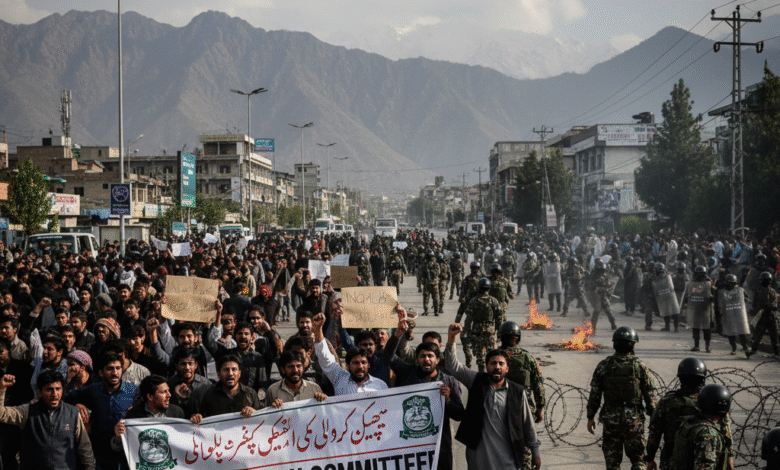
Pakistan-Occupied Kashmir (PoK) is witnessing one of its most intense civilian uprisings in recent years, as thousands take to the streets demanding relief from soaring living costs and systemic political neglect. The protests, led by the Awami Action Committee (AAC), have escalated into violent confrontations with security forces, resulting in multiple deaths, hundreds injured, and a sweeping internet blackout across the region.
The unrest began in Muzaffarabad, the capital of PoK, where demonstrators called for an end to what they described as “elite privileges” enjoyed by the political class—free electricity, luxury vehicles, and disproportionate control over local governance. Slogans like “Inqalab Aayega” (Revolution Will Come) echoed through the streets, as protesters demanded accountability and structural reforms.
Among the key demands are:
- Abolition of 12 reserved assembly seats for Kashmiri refugees settled in Pakistan, which locals argue distort representation and give Islamabad undue influence over PoK politics.
- Renegotiation of hydropower agreements, which currently allow Pakistan to extract energy from PoK without fair compensation to the region.
- Immediate flour subsidies to counteract inflation and food insecurity.
- Linking power tariffs to local generation rates, as residents face exorbitant electricity bills despite living in an energy-producing zone.
The protests have spread rapidly across towns and districts, prompting Islamabad to deploy paramilitary forces and suspend internet services in a bid to curb mobilisation. Visuals circulating on social media show convoys of security personnel entering protest zones, raising fears of a heavy-handed crackdown. Press clubs in Muzaffarabad and Rawalakot have reportedly been raided, with journalists alleging intimidation and confiscation of equipment.
According to reports, at least nine people have died in clashes with security forces, with hundreds more injured. Funeral processions for the deceased have turned into mass demonstrations, further intensifying public anger. The AAC has called for a “shutter-down and wheel-jam” movement, effectively paralysing daily life in many parts of the region.
The Shehbaz Sharif-led government in Islamabad, along with the Pakistani military establishment, is reportedly alarmed by the scale and intensity of the protests. Analysts suggest that the AAC’s demands—particularly the call to abolish refugee-reserved seats—challenge the very framework through which Pakistan has historically maintained control over PoK.
India has responded strongly to the developments. The Ministry of External Affairs condemned Pakistan’s “oppressive approach” and called for international scrutiny of human rights violations in the region. “These protests are a natural consequence of Pakistan’s systemic plundering of resources and denial of democratic rights in territories under its illegal occupation,” said MEA spokesperson Randhir Jaiswal.
The diaspora in the UK, US, and Europe has also mobilised, staging protests outside Pakistani consulates and calling for global attention to the crisis. Human rights organisations have urged the United Nations to investigate the allegations of brutality and suppression of free speech.
The economic backdrop to the unrest is equally troubling. PoK residents have been grappling with rising inflation, erratic power supply, and deteriorating public services. Despite being rich in natural resources, the region remains economically marginalised, with limited investment and infrastructure development. Many locals accuse Islamabad of exploiting PoK’s assets while neglecting its people.
The internet blackout has further isolated the region, cutting off communication and access to independent reporting. Civil society groups warn that such measures not only violate basic rights but also fuel misinformation and panic. Journalists and activists have called for restoration of services and protection of press freedom.
As the protests enter their second week, the situation remains volatile. While the AAC has held preliminary talks with government representatives, no breakthrough has been reported. The possibility of prolonged unrest looms large, with fears that the movement could evolve into broader demands for autonomy or even independence.
The crisis in PoK is a stark reminder of the region’s unresolved political status and the consequences of long-standing disenfranchisement. It underscores the urgent need for transparent governance, equitable resource distribution, and respect for civil liberties. Whether Islamabad chooses dialogue or repression will determine not just the fate of the protests, but the future of its relationship with the people of PoK.