
OSH India’s 13th Edition Sparks Urgent Dialogue on Workplace Safety and Mental Well-Being
Industry leaders, government officials, and health experts converge to address India’s evolving occupational health landscape and the role of innovation in safeguarding workers

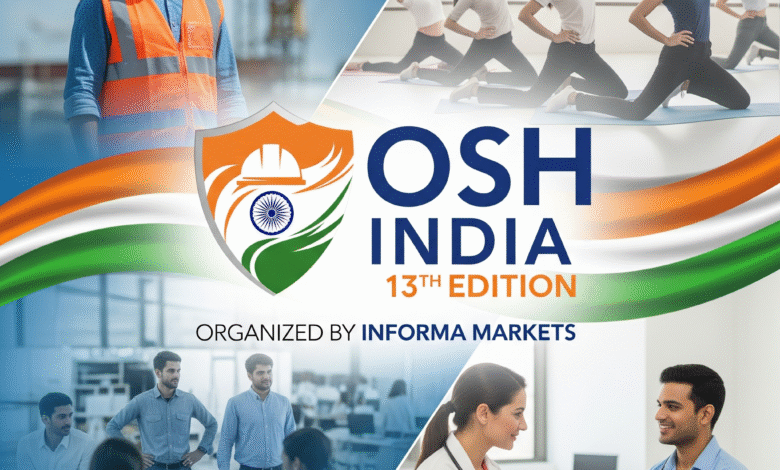
India’s industrial and corporate sectors are undergoing a pivotal transformation in how they approach workplace safety, health, and employee well-being. The 13th edition of OSH India, organized by Informa Markets, brought together a powerful coalition of voices—from government regulators and medical professionals to corporate leaders and safety innovators—to spotlight the urgent need for reform and innovation in occupational health and safety (OHS).
The event served as a platform for unveiling the latest technologies, policies, and strategies aimed at mitigating risks and enhancing safety standards across industries. With India’s workforce expanding rapidly and new sectors emerging, the conversation around workplace safety is no longer confined to traditional manufacturing zones—it now encompasses tech parks, logistics hubs, healthcare institutions, and even remote work environments.
One of the central themes of the conference was the implementation of Indian Labour Codes and their impact on workplace safety. Experts emphasized that while the codes offer a consolidated framework for labor rights and protections, their real-world application requires robust monitoring, employer accountability, and worker education. The discussion underscored the need for state-level coordination and digital compliance tools to ensure that safety regulations are not just theoretical but actively enforced.
Another key focus was the integration of technology in safety protocols. From AI-powered surveillance systems and wearable safety gear to predictive analytics for hazard detection, the role of innovation in preventing workplace accidents is growing exponentially. Industry leaders showcased solutions that can detect fatigue, monitor air quality, and even alert supervisors in real time about potential risks. These advancements are not only improving safety outcomes but also reducing operational downtime and insurance liabilities.
Mental health emerged as a critical dimension of occupational safety. With rising cases of burnout, anxiety, and workplace stress, panelists called for a paradigm shift in how organizations view employee wellness. Dr. Suhas Pingle and Dr. Rajendra Patankar highlighted the importance of integrating mental health support into corporate safety programs. They advocated for regular psychological assessments, confidential counseling services, and leadership training to foster empathetic work cultures.
The role of Personal Protective Equipment (PPE) was also revisited, especially in light of post-pandemic workplace realities. While PPE usage surged during COVID-19, experts warned against complacency. They stressed the importance of ongoing training, proper usage protocols, and quality assurance to ensure that PPE remains effective in diverse industrial settings.
Government representatives, including senior officials from the Directorate of Industrial Safety & Health, emphasized the importance of public-private partnerships in scaling safety initiatives. They called for collaborative efforts to develop safety training modules, conduct audits, and incentivize compliance through tax benefits or certification programs. The presence of dignitaries from both Maharashtra and Goa underscored the regional commitment to improving workplace standards.
Education and skill development were also spotlighted as foundational pillars of safety culture. Institutions like the Birla Institute of Management Technology shared insights into curriculum reforms that embed safety awareness into engineering and management programs. The goal is to cultivate a generation of professionals who prioritize safety not as a checkbox but as a core operational value.
The conference also addressed the role of social organizations and medical associations in driving awareness. Representatives from the Indian Medical Association (IMA) and Brahma Kumaris emphasized the need for holistic approaches that combine physical safety with emotional resilience and ethical leadership.
As India continues its journey toward becoming a global manufacturing and services hub, the importance of workplace safety cannot be overstated. Events like OSH India serve as crucial reminders that economic growth must be matched by human-centric policies and practices. The convergence of thought leaders, policymakers, and innovators at this edition signals a collective resolve to make Indian workplaces safer, healthier, and more humane.
In the words of one keynote speaker, “Safety is not a cost—it’s an investment. And the returns are measured not just in productivity, but in lives protected, families supported, and futures secured.”