
Mumbai’s Metro Line 11 Gets Green Signal: ₹23,487 Crore Project to Transform Urban Mobility
State government clears ambitious underground corridor connecting Wadala to Gateway of India, promising relief for commuters and a leap in infrastructure planning

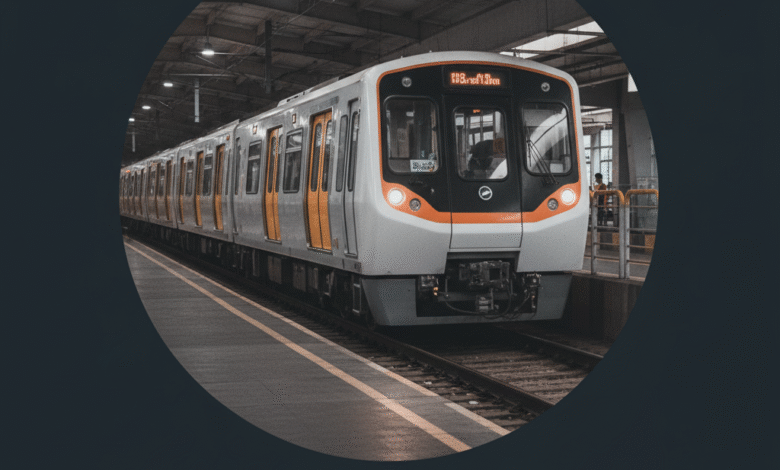
Mumbai’s relentless battle with traffic congestion and overburdened public transport is poised for a major breakthrough. The state government has officially approved the ₹23,487 crore Metro Line 11 project—a transformative infrastructure initiative that will reshape connectivity across central and southern Mumbai. This strategic move signals a renewed commitment to sustainable urban mobility and long-term planning in one of India’s most densely populated cities.
Metro Line 11, also known as the Green Line extension, will span 17.5 kilometers from Anik Bus Depot in Wadala to SPM Circle near the Gateway of India. The corridor will feature 14 stations, 13 of which will be underground, threading through some of the city’s busiest and most historic neighborhoods including Sewri, Byculla, Nagpada, Bhendi Bazaar, Crawford Market, CSMT, and Horniman Circle.
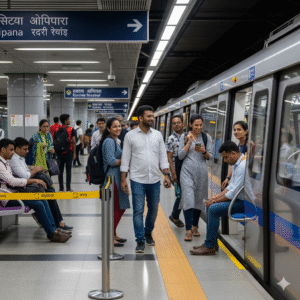
The project is designed to integrate seamlessly with existing and upcoming metro lines, including Metro Line 4 (Wadala–Thane–Kasarvadavali), Metro Line 3 (Colaba–Bandra–SEEPZ), and the Monorail at Wadala. This multi-modal connectivity will make Wadala a key interchange hub, drastically improving travel efficiency for lakhs of daily commuters.
The financial architecture of the project is equally robust. A ₹12,163 crore loan from financial institutions will cover 60% of the total cost, while the remaining funds will be sourced from the state and central governments, Brihanmumbai Municipal Corporation (BMC), Mumbai Port Authority (MbPA), and interest-free subordinate debt. In case of cost overruns, additional funding will be arranged through mechanisms like floor space index (FSI) revenue, transit-oriented development (TOD), or institutional loans.
The fare structure has been set with affordability in mind. Base fares will start at ₹10 and increase by ₹10 every three stations, capping at ₹70. A fare-fixation committee will oversee any future revisions, ensuring transparency and public accountability.
Beyond its immediate transport benefits, Metro Line 11 is expected to catalyze urban renewal and economic development. The TOD policy will allow additional FSI within 500 meters of the corridor, encouraging vertical growth and mixed-use development. This could lead to revitalization of aging neighborhoods, increased housing stock, and enhanced commercial activity along the metro route.
Environmental and logistical considerations have also been factored into the planning. The project will require 20.35 hectares of government land and 2.36 hectares of private land. Its underground design minimizes surface disruption, preserving heritage zones and reducing noise pollution. The Mumbai Metro Rail Corporation Limited (MMRCL) will oversee construction and operations, leveraging its expertise from previous metro phases.
Urban planners and transport experts have hailed the project as a game-changer. With Mumbai’s population projected to cross 25 million by 2035, the need for efficient, high-capacity public transport is more urgent than ever. Metro Line 11 not only addresses current bottlenecks but also lays the groundwork for future expansion and resilience.
The corridor’s extension to the Gateway of India, instead of the originally planned CSMT terminus, reflects a strategic shift to enhance access to South Mumbai’s heritage and business districts. This move is expected to boost tourism, ease last-mile connectivity, and reduce vehicular load in congested zones.
A high-powered committee led by the chief secretary will monitor implementation, ensuring timely execution and adherence to quality standards. The project has been declared an “important public and urban transport initiative,” underscoring its priority status in the state’s infrastructure roadmap.
As Mumbai continues to evolve into a global megacity, Metro Line 11 stands as a symbol of forward-thinking governance and citizen-centric development. It’s not just a metro line—it’s a lifeline for millions, a catalyst for growth, and a blueprint for how cities can balance heritage with progress.