

Mumbai Braces for Red Alert Monsoon: A City Under Siege
Unprecedented Deluge Leads to Widespread Disruption and Heightened Alert

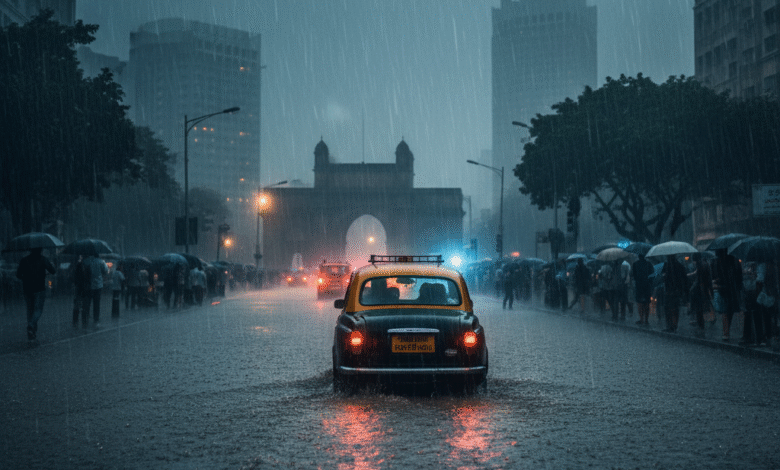
Mumbai, the bustling financial capital of India, finds itself once again at the mercy of the relentless monsoon, as heavy rainfall has lashed the city and its surrounding regions, prompting the India Meteorological Department (IMD) to issue a stern ‘red’ alert for Mumbai, Thane, and Raigad. The torrential downpour, a familiar yet perpetually challenging annual event, has brought the city to a near standstill, causing widespread waterlogging, severe traffic disruptions, and significant challenges for daily commuters. This latest spell of intense rain underscores the fragility of urban infrastructure against the brute force of nature and highlights the urgent need for enhanced preparedness in a city that frequently battles the monsoon’s fury.
The ‘red’ alert, the highest warning issued by the IMD, signifies that weather conditions are expected to be extremely adverse, with potential for more than 20 cm of rain within 24 hours. For Mumbai, this translates to choked drains, submerged roads, and disrupted public transport—a scenario that residents know all too well. From the iconic Marine Drive to the suburban bylanes, vast swathes of the city have transformed into watery expanses, making vehicular movement excruciatingly slow and hazardous. Commuters, accustomed to the city’s fast pace, found themselves stuck for hours, as local trains, the lifeline of Mumbai, experienced delays and cancellations, further compounding the chaos. The downpour began with relentless intensity, quickly overwhelming the city’s drainage systems, leading to flash floods in low-lying areas and underpasses.
Beyond the immediate disruptions, the heavy rainfall raises serious concerns about public safety and health. Authorities have urged citizens to stay indoors and venture out only if absolutely necessary. Emergency services, including the National Disaster Response Force (NDRF) and local civic bodies, have been activated and are on high alert, prepared to tackle any untoward incidents. Cases of tree falls, short circuits, and structural damages have been reported across the region, necessitating swift response from disaster management teams. The risk of waterborne diseases also escalates during such intense monsoon spells, prompting health advisories to be issued regarding sanitation and hygiene. The civic administration is working tirelessly to pump out water from critical junctions and restore normalcy, but the sheer volume of rainfall presents an uphill battle.
The recurring monsoon woes in Mumbai spark an annual debate about urban planning and infrastructure resilience. Despite numerous projects aimed at improving the city’s drainage capacity, the sheer scale of development and the unyielding nature of the monsoon often prove overwhelming. Experts point to factors such as unchecked concretization, shrinking open spaces, and the blockage of natural water channels as contributing significantly to the waterlogging problem. The aging infrastructure in some parts of the city also struggles to cope with the increased load, leading to unforeseen challenges. This year’s red alert serves as a stark reminder that while the city strives for global standards, its fundamental vulnerabilities during extreme weather events remain a critical concern.
The impact of the heavy rains extends beyond mere inconvenience, affecting various sectors of daily life. Business operations have been curtailed, with many offices opting for work-from-home arrangements or early closures. Supply chains for essential goods face disruptions, and local markets witness reduced footfall. The agricultural sector in Thane and Raigad districts also bears the brunt, with potential damage to standing crops and livelihoods. Educational institutions have declared holidays, prioritizing the safety of students and staff. In essence, the monsoon, while vital for the region’s water supply, brings with it a cascade of economic and social challenges that the city must navigate with resilience and strategic foresight.
Amidst the chaos, the spirit of Mumbaikars shines through. Despite the hardships, instances of community support and solidarity emerge, with volunteers assisting stranded commuters, local residents offering shelter, and civic groups actively participating in relief efforts. This collective spirit of endurance and mutual aid is a hallmark of the city, demonstrating its unwavering resolve in the face of adversity. However, beyond immediate relief, there is a growing consensus that long-term, sustainable solutions are paramount. This includes accelerating infrastructure projects, improving waste management to prevent drain blockages, and developing robust early warning systems to mitigate the impact of future extreme weather events.
As the ‘red’ alert remains in effect, all eyes are on the skies, hoping for a respite from the relentless downpour. The coming hours will be crucial for Mumbai and its neighboring districts as they continue to battle the deluge. This monsoon update is not just a weather report; it is a critical narrative about urban resilience, environmental challenges, and the enduring spirit of a city that constantly pushes forward, come rain or shine. The lessons learned from each monsoon continue to shape Mumbai’s journey towards becoming a more flood-resilient and sustainable megacity.