
Diplomatic Spat on the Pitch: Pakistan Lodges Formal Protest Against India Over ‘No-Handshake’ Incident
Asia Cup Match Ends in Political Firestorm as On-Field Tension Spills into Bilateral Relations

Diplomatic Spat on the Pitch: Pakistan Lodges Formal Protest Against India Over ‘No-Handshake’ Incident
Asia Cup Match Ends in Political Firestorm as On-Field Tension Spills into Bilateral Relations
In a dramatic turn of events that has transcended the boundaries of sports, Pakistan has formally lodged a diplomatic protest against India, alleging a “no-handshake” incident following a high-stakes Asia Cup match. The move has plunged the cricketing world into a political firestorm, sparking intense debate across social media platforms and raising fresh concerns about the fragile state of bilateral relations. The incident, which occurred in the aftermath of a fiercely contested match, has been amplified by politicians and commentators on both sides, transforming a moment of sportsmanship into a charged diplomatic affair.
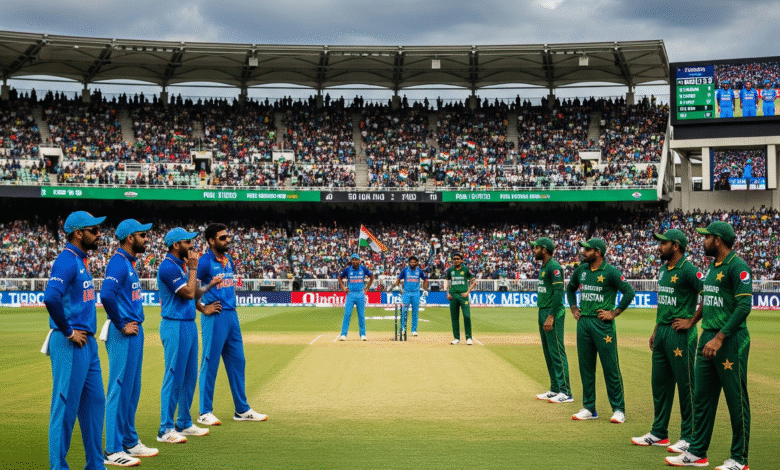
The incident in question took place after the final ball was bowled in the crucial Asia Cup encounter between the arch-rivals. According to reports and videos circulating widely online, a group of players from the Pakistani team approached their Indian counterparts for the customary post-match handshake, a gesture of respect and goodwill. However, players from the Indian team were seen walking past them without engaging in the handshake. While the Indian team’s side of the story is yet to be officially clarified, this apparent cold shoulder was immediately interpreted by Pakistani officials as a deliberate and unsportsmanlike act, driven by underlying political animosity.
Reacting swiftly, the Pakistan Cricket Board (PCB) reportedly moved in tandem with its government to lodge a formal protest. Sources familiar with the matter indicate that a formal note of complaint was sent to a relevant international cricketing body, with copies shared through diplomatic channels. The protest note is said to have highlighted the incident as a serious breach of cricketing etiquette and a violation of the spirit of the game. Pakistan’s government, in a separate but coordinated move, formally registered its discontent with New Delhi, arguing that such actions by the Indian team are not conducive to easing tensions and could further sour relations between the two nuclear-armed neighbors. Officials in Islamabad have publicly stated that sports should act as a bridge for peace, and that this incident was a disappointing setback in that regard.
On the Indian side, the official response has been more measured, largely downplaying the incident. Sources within the Board of Control for Cricket in India (BCCI) have dismissed the protest as an overreaction. They have hinted that the players’ actions were likely a result of the intense on-field pressure and the heat of the moment, rather than a calculated political statement. One senior BCCI official, speaking off the record, commented that expecting a choreographed, perfect display of sportsmanship after a high-voltage match is unrealistic and that Pakistan is “making a mountain out of a molehill.” The Indian Ministry of External Affairs has, so far, refrained from a direct public comment, likely seeking to avoid an escalation of the diplomatic row. However, politicians and public figures have been vocal on social media, with many defending the team and criticizing Pakistan for politicizing a simple cricketing event.
The incident has opened a floodgate of commentary and debate, particularly on social media. #NoHandshake and #CricketDiplomacy began trending on X (formerly Twitter), with fans from both countries trading barbs and accusations. Clips of the incident were replayed countless times, with each side offering a different interpretation. For many in Pakistan, it was seen as an insult and a reflection of a deeper disrespect. In India, it was viewed as either a non-issue or a justified reaction to years of strained relations, with some users even celebrating the move as a show of national pride. The incident quickly became a microcosm of the larger political tensions that define the India-Pakistan relationship, demonstrating how a small on-field event can be instantly co-opted and politicized by nationalistic narratives.
This is not the first time a cricketing match has become a diplomatic flashpoint between the two nations. For decades, India-Pakistan cricket matches have been more than just games; they have been symbolic battlegrounds, diplomatic tools, and, at times, lightning rods for controversy. The matches are watched with an almost religious fervor on both sides of the border, and the outcome is often tied to national pride and political posturing. The current incident serves as a stark reminder of this long and complicated history, proving that even in an era of global sports, the geopolitical realities between these two nations continue to cast a long shadow. Experts in international relations have long argued that while sports can offer a rare opportunity for friendly competition, they are also highly susceptible to the political baggage they carry.
As the UN Security Council is set to hold an emergency meeting on a separate issue, this cricket-related diplomatic row, while not on the official agenda, is expected to be a subject of informal discussion and concern among diplomats. The incident underscores a critical question: should sports be a platform for political statements, or should they remain a sacred space for healthy competition? While there are no easy answers, the events of the past few days have shown that for India and Pakistan, the boundary between the playing field and the political arena is perilously thin.
On-Field Snub Ignites Diplomatic Row: Pakistan Lodges Formal Protest Against India
A “No-Handshake” Incident After Asia Cup Match Becomes a Flashpoint in Bilateral Relations
In a dramatic turn of events that has transcended the boundaries of sportsmanship, Pakistan has formally lodged a diplomatic protest against India, alleging a “no-handshake” incident following their high-stakes Asia Cup match. This seemingly minor on-field incident has ignited a political firestorm, sparking intense debate across social media and raising fresh concerns about the fragile state of bilateral relations between the two nuclear-armed neighbors. The episode, coming after a fiercely contested game, has transformed a moment of athletic grace into a charged diplomatic affair, reflecting the deep-seated tensions that continue to define the rivalry.
The incident in question occurred in the immediate aftermath of a crucial Asia Cup encounter between the arch-rivals. According to reports and widely circulated footage, the players from both teams were expected to engage in the customary post-match handshake, a gesture of respect and goodwill. However, players from the Indian team were observed walking past their Pakistani counterparts without reciprocating the gesture. This perceived snub was immediately interpreted by Pakistan’s cricket officials and government as a deliberate act, one that went against the spirit of the game and carried clear political overtones.
In a swift and coordinated response, Pakistan’s government and its cricket board moved to lodge a formal protest. Sources familiar with the matter indicate that an official note of complaint was sent to a relevant international cricketing body, with copies shared through diplomatic channels with New Delhi. The protest note is said to have highlighted the incident as a serious breach of cricketing etiquette, one that damages the game’s reputation as a tool for fostering friendly ties. Officials in Islamabad have publicly stated that while sports should act as a bridge for peace and friendship, this incident was a disappointing and unfortunate setback in that regard.
On the Indian side, the official response has been more measured, largely downplaying the significance of the event. Sources within the Board of Control for Cricket in India (BCCI) have dismissed the protest as an overreaction. They have hinted that the players’ actions were likely a result of the intense on-field pressure and the heat of the moment, rather than a calculated political statement. A senior BCCI official, speaking off the record, commented that expecting a perfect display of sportsmanship after a high-voltage match is unrealistic, and that Pakistan is “making a mountain out of a molehill.” The Indian Ministry of External Affairs has, so far, refrained from a direct public comment, likely seeking to avoid an escalation of the diplomatic row. However, politicians and public figures have been vocal on social media, with many defending the team and criticizing Pakistan for politicizing a simple cricketing event.
The incident has opened a floodgate of commentary and debate, particularly on social media. #NoHandshake and #CricketDiplomacy began trending, with fans from both countries trading barbs and accusations. Clips of the incident were replayed countless times, with each side offering a different interpretation. For many in Pakistan, it was seen as an insult and a reflection of a deeper disrespect. In India, it was viewed as either a non-issue or a justified reaction to years of strained relations, with some users even celebrating the move as a show of national pride. The incident quickly became a microcosm of the larger political tensions that define the India-Pakistan relationship, demonstrating how a small on-field event can be instantly co-opted and politicized by nationalistic narratives.
This is not the first time a cricketing match has become a diplomatic flashpoint between the two nations. For decades, India-Pakistan cricket matches have been more than just games; they have been symbolic battlegrounds, diplomatic tools, and, at times, lightning rods for controversy. The matches are watched with an almost religious fervor on both sides of the border, and the outcome is often tied to national pride and political posturing. The current incident serves as a stark reminder of this long and complicated history, proving that even in an era of global sports, the geopolitical realities between these two nations continue to cast a long shadow. Experts in international relations have long argued that while sports can offer a rare opportunity for friendly competition, they are also highly susceptible to the political baggage they carry.
As the UN Security Council is set to hold an emergency meeting on a separate issue, this cricket-related diplomatic row, while not on the official agenda, is expected to be a subject of informal discussion and concern among diplomats. The incident underscores a critical question: should sports be a platform for political statements, or should they remain a sacred space for healthy competition? While there are no easy answers, the events of the past few days have shown that for India and Pakistan, the boundary between the playing field and the political arena is perilously thin.